
1976 - The Year things Changed - Linda's Midwife Journey and a Spiritual Crossroad; Logs & Stones, A Wooden Dome; Paul’s Mom; Their “Last Hurrah”
Click on the arrows below to open each topic
Linda progressed from an attendant, a bit fancier name but essentially the same as an orderly, and worked in the pediatric ward at the University Hospital. She volunteered early at the Women’s Health Clinic (Free Clinic) on Main Street. Just started and a brand new concept those days, in no small degree because of her efforts of those like her, a woman’s health clinic is now relatively commonplace in most communities, even expected.
She liked what she was doing, healthcare. Starting nursing school at Piedmont Virginia Community College, she continued working in Labor and Delivery (“L&D”). When she graduated, she continued L&D and became associated with a nascent group of lay midwives, illegal in Virginia and most of the country at that point, but part of a burgeoning fundamentalist Christian as well as Hippie back-to-the-Earth movement.
Combined with her fundamental activist streak, and primarily through a close network of friends, she attended and may have accomplished several home deliveries, following one legitimate midwife but also one extremely untrained and eventually dangerous lay midwife.
Predicting Linda and Paul would settle down with children and career, and then such careening across the landscape would no longer be viable, a friend’s mother described this trip as their “Last Hurrah”. It was wisdom, not a judgment or prediction. And they did their best in the years after having children to defy it.
In a Volkswagen bus once again, the Tumbleweed Express, but this had a better and newer engine, and a fold-down backseat into a bed, and an installed wood frame cabinet.
Their friend, Judge, lost his father and was heading west, seeking for fame and fortune as a movie star. It was late October, and as they hit the high country and the Rockies, it was cold, damn cold. Judge about froze outside the bus, and Paul and Linda about froze inside the bus, sheets of condensed then frozen breath layering the windows, the same inside Judge’s tent.
They jettisoned the wood cabinet to make room inside, and reached Glacier National Park, then Yellowtone.
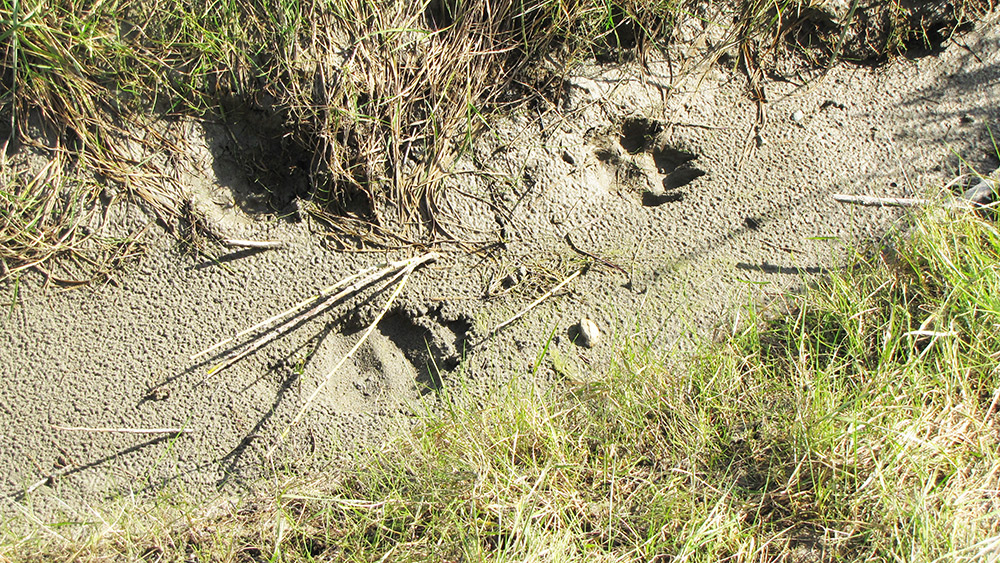
Reaching Yellowstone, together they backpacked up the Yellowstone Valley. Linda had legitimate concerns after seeing warning signs that included photos of charging grizzlies. A legitimate concern, and she was in fact quite frightened. Starting the three-day trek, Paul noticed in the soft sand near the lake edge two very large footprints. Linda noticed them too, but Paul hurried her along, saying it was a man in bare feet, hoping she would miss the fact the toes didn’t match, and the size was much greater with long claws at the end.
For three days they followed a small herd of wild buffalo, getting closer and closer each day, until topping the rise of a gentle hill, they came upon them. It is not wise to approach wild creatures of any sort too closely. The bull kept his eyes on them, shifting position with his cows and calves behind him and so he always caught their scent. In that magical moment, Linda bent to pick up a wad of soft buffalo hair from a nearby bush. This she kept along with other animal and wild artifacts she acquired over her lifetime, including caribou, arctic grizzly, wolf, mountain goat, and if bones are counted, sea creatures and birds galore.
Their friend, Judge, had an incredibly willing heart but was a tenderfoot with little camping experience. He started out reveling in the experience until he got his feet wet, after which he cursed for the rest of the day. It WAS cold… Starting to grate on each other, irritability flaring with frictions from everyday interactions, he decided to drive off on his own for three days to explore the rest of Yellowstone, something he told them later transfixed and transformed him.
Linda and Paul for their part took off to backpack into the forest, camping on the edge of a woodland meadow. The next morning frost covered their tent, and they were awakened at first light by a bugling elk and a herd of 30 wapiti in the meadow next to them. Vapor off the elk’s hides and steam from their nostrils wreathed together with fingers of early morning mist, as the first rays of light set everything magically aglow. Linda gathered a tuft of wapiti fur from the ground.
They camped with Judge one more time before heading south along the front range. At a campsite empty that time of year, coyote howled through the night on the hill above them sending Linda into the bus for the night. She again felt legitimate reality aroused legitimate fears, but sadly, got unjustified reactions from the menfolk about how her internal stability, positivity, earth-mother wisdom failed a true test. That was not true.
They went on from Yellowstone to Boulder where Judge’s first true but then estranged love lived. After a visit with his ex, he felt healed enough he told them. Linda and Paul gave him a few hundred bucks, and he said goodbye, heading off on his own to LA to be discovered.
Before leaving Virginia months earlier, encouraged by Linda to consider medical school, Paul accomplished proforma “cold call” letter reach-outs to various persons who might write the required “letter of recommendation” for Med School Admissions folks. Oh so important. He did it, and they blasted out west. Months after that letter, unfortunately 2000 miles away with a little or no cash or means to get back, the (as it turned out) head of the Osteopathic Medical Virginia Society wanted to meet and interview Paul.
In those days they had what were called “drive-aways“, a car a family or the government or a company needed transported to where an employee had been transferred, some with gas reimbursed, but most requiring the driver to gas up. Still, a great deal, a free trip transcontinental in a vehicle that worked!
Linda saw it right away. The best idea, heck, the only way, was to get other people who wanted to go east, who would chip in for gas, who could pitch driving in one mad-dash marathon plunge across the Rockies, the Great Plains, and the Appalachians. 1900 miles, 29 hours. She posted on the University bulletin board café a small flier. Eating veggie burgers, they giggled outraged: the café was named after the only survivor of a wagon train trying to cross the Rockies in the 1800’s. Trapped by a heavy Autumn snow, he ate his companions, presumably dead and frozen: Packard – that is the name of the grill.
Not a great omen!
They found four people. Two Rajneesh devotees, a draft resistor, and some person who never talked and barely looked up. Doing 70 to 75 mph on the interstate 15 feet off the back of a tractor-trailer in its tailwind, saving gas in pennies, Paul made it back east.
Linda got a temp gig as a home health aide for an elderly woman in Boulder, no RN license needed, and slept as she had so often in the back of their intrepid Tumbleweed Express VW bus.
Paul’s interview went well. But back in Charlottesville for a westbound Trailways bus back to Linda the next morning, frigid cold but lighting a fire in their half-built but at least somewhat weather-tight Esmont dome, Paul splurged on a meal. A tempura all-you-can-eat. Bad idea. He got food poisoning. Barely surviving the night, in a cold sweat, shaken and weak, Linda wanted to bust-ass drive back to him, but he boarded the bus and made it back to her in Boulder.
Reunited, the cold weather drove them south
Onto Tucson, heading south as winter kicked them that way, welcomed by saguaro cactus: magnificent, austere, and even unearthly cactus forest around. Overcome, almost reverential, they talked only in low tones if they talked at all. When they had to pee, they would find a smaller saguaro, and sharing their water, chant, “Grow, saguaro, grow!”. Once, while Linda was accomplishing this ritual, a pack of coyotes raised by barely 30 feet off, pretending they didn’t notice her, them – their dignity precluding them from letting the humans know. Yes, dignity.
They headed next for Mexico, the principal reason and destination being a visit to one of Linda’s relatively distant relatives who lived in Mexico City. Waiting to cross the border in Nogales, it was Thanksgiving night. To celebrate, Linda prepared, tried to prepare, with all love and intent as she always had a Thanksgiving dinner on a Coleman burner stove.
A casserole, or a loaf, or some damn thing, she called it “Pinto Pie”. A solid mass of compressed beans with some seasoning literally weighing pounds, congealed into a solid mass that was vaguely warm, and burned in parts. They tried but failed to eat more than a few bites. They in fact “gave thanks” it didn’t kill them! Not one of her greatest culinary moments, but one that had them thankful and rejoicing for each other and for life. Laughing in each other’s company, they crossed the border the next day.
Taking a western route, they regularly consulted a hippie-written handbook called “The People’s Guide to Mexico”. This travel guide addressed all the legitimate concerns and apprehensions about traveling there, but in a commonsense tone that allowed them to feel relaxed, adventurous and fun. Still, Paul had Mexico as a young teen and despite the hippie guide’s reassurances, tales of drug runners and predatory bandits engendered in them a sense of hyped-up caution.
Each night, they searched for small out-of-the-way places, usually a church behind which to park the bus. Sometimes, though, if they miscalculated the distance to the next town, they had to pull over onto rugged dirt-road tracks they hoped weren’t much used.
On one occasion, with Linda exercising more common sense and less unquestioning trust of her lover’s judgment, they had an argument about the wisdom or lack thereof of essentially just hiding in the bushes in rural Mexico. She acquiesced, but the next morning, voices a foot off on both sides of the bus awoke them. They huddled in their sleeping bags suddenly freaked out about the danger. No threat at all, the voices came from workers on their way to the field, laughing and talking.
Still, this precipitated their first real fight, coursing through their veins and dissolving their usual gentleness with each other. Linda, among other skills she was developing, made her own yogurt on the trip. This morning, loud voices, louder with each retort, the yogurt wound up on the side of Paul’s face and chest. That ended the fight, and they instantly hugged, yes, and even laughed. From then on, the rest of the trip’s stressors they took in stride, happy just to be with each other and to experience the world together.
Everyone in Mexico loved Linda. Who couldn’t? Paul knew some rudimentary Spanish and had enough of an accent even if his grammar was horrendous to evoke smiles and laughter, an appreciation that he at least tried. Linda perfected her Spanish: one sentence that said, “I do not speak Spanish, but my husband does”!
From village to village, seeking out Tortilleria to buy cooked beans, and the street markets for verduras and fruitas, they followed the sketchy guidebook down the west coast, making their way through Michoacán, searching on this leg for an infant volcano that grew up fast.
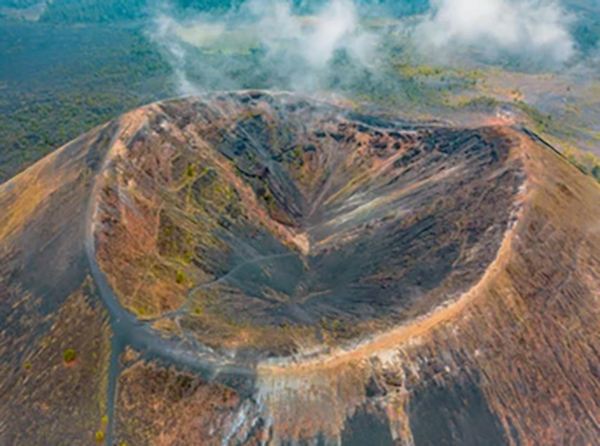
Paricutin: they both read about in first grade in their Weekly Reader. In his field, a local farmer complained about a small one-foot circle where corn would never grow. One day it began steaming, then smoking, and, over weeks and months, became a 3000-foot-wide caldera spewing lava that covered the nearby town and church.
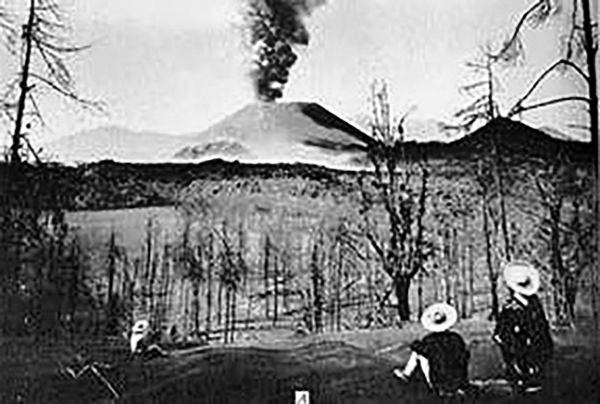
In the shadow of the ash cone, searching for a place to park the bus for the night, they spotted a house for sale, but with the “For Sale” sign in English. That seemed reassuring, so they pulled into the driveway of a cabin-style home surrounded by a field of avocado plantings. Joe and Elida, avocado ranchers, immediately took them under their wings, and took them on a tour of the entire region, including steaming rivulets pouring into a canyon in the city park. “These were never here before, hot springs until the volcano appeared”.
The volcano – Joe hired a guide to take them through the labyrinth of lava tubes and gullies, following a crude hand-painted symbol of a distressed human figure and the words, “Find me, save me”. Evidently, many a person became lost amid razor sharp now-solid lava flows and needed search and rescue. Their companion guided them to the top of the volcano, the rocks so hot they nearly burned the soles of their feet, so hot that their guide lit his cigarette off one.
They stayed for several days and left with warm embraces, and new friends they were certain they’d visit again. But life too often, maybe philosophically “always” carries people along, and away from each other, losing connection and contact, and becoming only a warm and distant memory.
Ah, but what a memory.
Rolling into Acapulco, all the upper-crust lodging way beyond their means and their inclinations, they parked (and slept) in a beach-side lot. As before, a crowd surrounded the bus in the morning, cheerfully and brazenly pressing them as they emerged to buy one trinket, carving, painting or another, all crafted and being sold by local artisans. EXACTLY what they were looking for!
Like Irish Tinkers, Linda more than Paul began uproarious bartering. Hauling tools out of the VW bus, old-timey tools picked up at a Virginia farm auction, tools for their log cabin work but deemed too old or awkward to keep and use, they horse traded.
An ax with a chip in it but still solid; hand drills, wooden planes and a half-trunk full of other antique farm tools. Linda had macrame belts and dream weavers she’d made. Astounded that gringos could and would bring items to trade, would even deign to trade at all, amid a riotous assembly of shouting and laughing locals, they bartered for woodworking, a candle stick set that they retained for 50 years, local parchment paintings, dazzling multi-colored shirts and ponchos that on reflection when they returned home months later, felt too gaudy to wear anywhere, but kept and affectionately remembered.
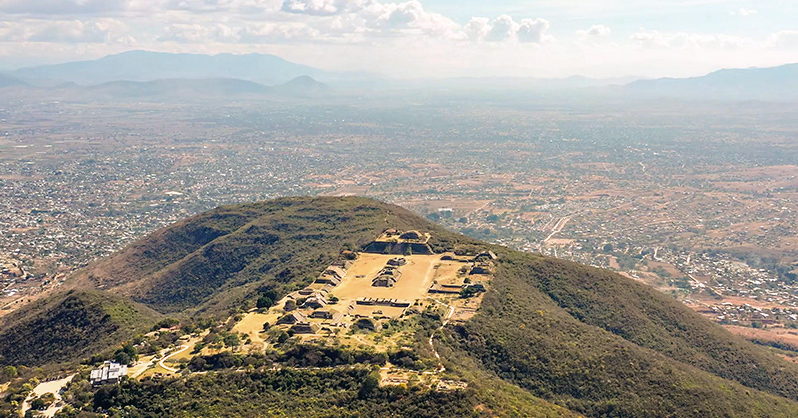
They got rid of most of what they brought and toddled down to Monte Alban, City of the Dead. Below the mount atop which were the world-famous ruins and pyramids, they were approached by two teens who wanted to sell small figurines. Paul had a thing for fetish carvings and totemic figurines, and thought if the price was right ( ie. low to ridiculously cheap!) they might again barter. They had a little left to trade, so Paul bartered his precious Jean jacket for two carved pendants made of turquoise, or jade, exquisite and clearly indigenous if not ancient. Both parties were delighted with the trade, those two pendants started a collection of indigenous totems and artifacts which were about the only thing Linda and Paul would pick up on their continued travels through life.
Eventually, their money and time ran out, and they headed back home. Crossing Texas, they searched out a fast-food place for burritos that weren’t stuffed with meat, something they could both afford, and eat (they both had become vegetarians). Asking at the counter for meatless fare, the staff barely concealed their astonishment. The young beaming server behind the counter must have figured there was only one explanation, and with a sweet Texas drawl, asked “Are you missionaries”?
No, they weren’t but appreciated the implied compliment.
As they left Texas, which took several days to drive, their sentiments matched a bumper sticker at one truck stop: “The sun it rose, the sun it set, and my God we’re still in Texas yet!” Starting a dash across the Great Plains, they looked dubiously at their steel-belted radial tires, which by that time looked like the bottom of a worn shoe, craters along the treads with deepening layers of unraveling steel belt, any of them ready in a heartbeat to get deep enough to let all the air whistle out of the tire, and with no cash except a handful of bills for gas, leaving them and the bus stranded a thousand miles from home.
They had no choice. They damn well weren’t going to ask Linda’s parents for another rescue! Been there, done that, and it took years to outlive Evelyn’s semi-caustic reminders. So, they pressed on, catching the Christmas spirit and lights across six states, even singing their own Christmas carols, hippie judgmental disdain and Linda’s Jewish upbringing washed away in a warm feeling of being back in the US and nearing home.
They made it back to Charlottesville Christmas Eve, with nowhere to go except to their friends Douglas and Patricia’s homestead. Bouncing down their rocky driveway for a half mile, one Paul had helped Douglas lay with stone, they pulled up to the cinder block house, two tires going flat as soon as they turned off the engine. Like the Blues Brothers’ car after the massive police chase into Chicago, held together until arrival only by good vibes and the grace of God until they got home safe and sound.
Welcomed in to spend Christmas Eve with them, Linda and Paul eased back into “reality”. (Linda delivered several of their children in later years, but the love and welcome were there even in those early years.)