
1972 - First Cross-Country Trip; An antique and (they learned too late) burned out VW bus
Click on the arrows below to open each topic
They purchased a split-windshield circa 1960 VW bus for $150, then another $125 for a 35 hp engine, inside which they hammered together a 2X4 sleeping platform that weighed 250 lbs. Vehicle could barely chug up to 50 mph.
A “friend” crashed Paul’s 1956 vintage Chevy pickup and didn’t pay the fine, so the Virginia DMV penalized him and suspended his license. They were not able to straighten it out before leaving, and so drove all the way across country with Paul sans license.
Linda struggled then triumphed learning to drive her first stick shift of all places in the W VA mountains around Franklin. Clashing and gnashing (gears, not teeth, though there may have been a bit of that, too!), Linda showed determination and quickly became capable. Then they followed US Route 50 west, west, West…
Searching backwater Ohio for a serpent “Indian Mound,” they tried to find an out-of-the-way, off-the-road spot to hide the bus and spend the night. Snuggled in each other’s arms, they were awakened by four cars with flashing lights and spots, silhouetted uniforms with torches, demanding ID. Uh, her lover didn’t have one! The vibe got tense until Linda hastily dressed and poked her head forward.
With her innocent “What, me??” smile disarming all hostility, after a quick huddle, the Ranger huffed out it was against the law to cohabitate in Ohio, and they better get going. They did. Happily!
They picked up Duffie and Dave (“Never pass by a hitchhiker!” A creed and oath in those days). Duffie was a Harlem street-lord and Dave his white boy hippie-grunge companion who looked like he just emerged from a deep pit coal mine. Linda & Paul took them across the Great Plains until 45 mph head winds and burned-out piston rings slowed the bus to a crawl and the two of them wisely bailed.
Linda and Paul could not: the bus was all they had.
They puttered into Boulder, tried to ascend the foothills when all compression failed, and the bus coasted down into town into the University section in front of a fraternity.
“How to Keep Your Volkswagen Alive for the Complete Idiot” the first in a venerable line of titles ripped off for every project or skill imaginable… but this first one was the real McCoy and their mechanical bible. Almost no money, they had to “rebuild” the engine on the curbside, walking with the extracted fried parts to a machine shop to do the rings… Hoping the crankcase was sound, off they went again.
Unbeknownst to them the engine had not been repaired completely, rebuilt only down to the main bearings, and that’s what finally went. But it was running – at that point.
Backpacking only the second time together, and the first time outside the Blue Ridge, the dimensions and the potential for mistakes expanded. They chose the least traveled trail, then gaping and gasping in awe missed the trail, so untraveled and faint. Hard to tell at first, but after five hours it became clear: there was no trail left. Among other stupid mistakes to follow, Linda’s beau looked at the map and decided they could continue to the canyon’s end and scale out to a different trail on the Great Divide 3000 feet above.
For four days, heading up the wrong canyon in truly trackless wilderness, his side pack tore open, spilling birth control pills, water purifying pills, TP, and smoke. They noticed only when sitting for lunch amid the columbine and fireweed. “Uh, honey! No pack!“
Getting lost was bad enough, and decidedly not the impression to convey to his still-new sweetie. But the loss of the specific contents seemed somehow worse, precluding almost any measure to reduce their stress and commune.
Back down the canyon he went, mimicking tracking technique seen as a child on TV: searching desperately for a bent tuft of grass, a depressed leaf or broken twig, here and there. A half day, then item by item strewn over a mile, all got retrieved.
Jubilation was short-lived. That evening they reached a dead-end glacial creche with a 2000-foot scree slope above. A turquoise-blue glacier pond highlighted the bleached skeleton of a bighorn that hadn’t made it out some prior winter. That provided motivation! Crawling up, hands and knees, then hitting the snow field, Linda could walk across the frozen crust. But with their pack her sweetie kept breaking through, knee deep, gasping for breath in the high altitude, Linda cajoling, pulling him up to fall three steps later. She kept it up, encouraging Paul… saving him. They partially thawed frozen boots over their backpacker stove (one purchased after their Blue ridge trek the year before.)
Linda could have complained. Who wouldn’t? She could have criticized the abundantly clear stupidity. Many would. She might have collapsed in fatigue herself, refusing to go any further, pushing them into an alpine-rescue situation. She didn’t.
That was the kind of woman she was: spirit and irrepressible positivity, toughness and sweetness, a gentle and forgiving nature.
Paul saw it all and realized what it meant.
All they had for a guide was a Rand McNally atlas which displayed in the smallest red font possible points of interest. If some labelled location piqued their curiosity, they sought to go there. Lots were a bust, and some apparently didn’t exist at all, like the “Million Year Old Dinosaur Graveyard” in West Wyoming. Others turned out to be fantastic. Hurrah Pass was one, but for them became a near but escaped disaster.
The map showed a dotted-line back road from Moab over to the Colorado river. This was-is some of the most rugged country on Earth, but Linda’s companion naively asserted “Hey, the atlas shows there’s a road, we can make it“. In their minivan they crawled a way into the back country – road NOT, just a bulldozer scrape across the bedrock and dry washes. Dark fell, and goosing the bus up a steep grade, the rock slipped away. Damn if the left rear tire of the bus didn’t spin in midair. The vehicle teetered, about to roll over.
They freaked. But Linda with barely a plea and mostly her own fear and common sense jumped in the back so that the balance was just enough to keep the bus from further tipping, while Paul scrambled outside and propped stones under the free-hanging tire. Unbelievably, they were able to roll off, turn around, and escape unscathed.
That is the kind of courage Linda manifested.
What is now the Needles District with the Needles Overlook did not exist on their first trip out. Canyonlands was not a National Park. It was a planned repository for radioactive nuclear waste, where the powers-that-be intended to build a dedicated rail line all the way along the wild Colorado River to stash the toxic poison into subterranean salt deposits lying under miles of rock strata above.
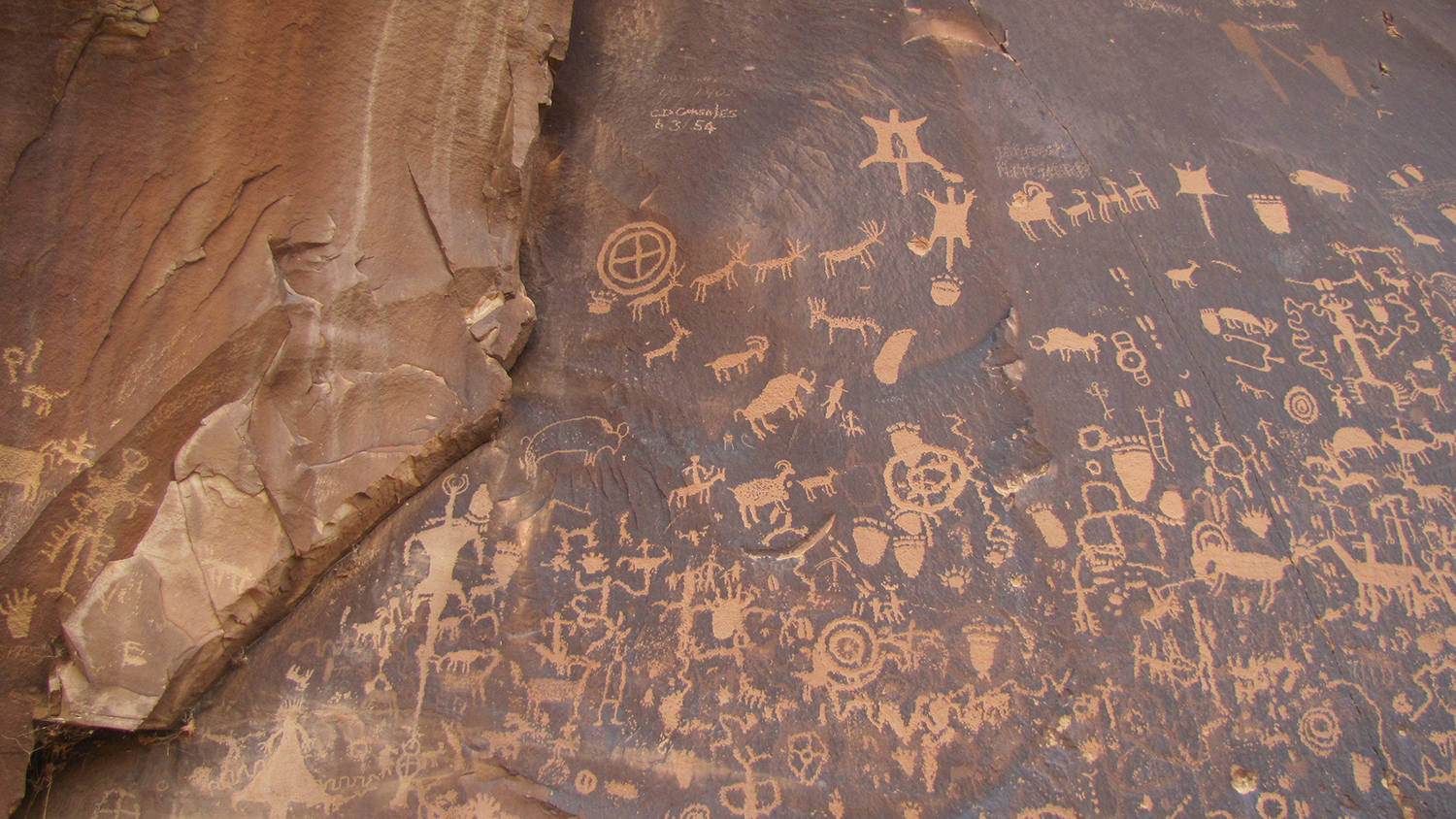
The sketchy road they drove dropped steeply from upland flats into a valley at the foot of Cathedral Mesa where a dense grove of mature cottonwoods lined both banks of a swift moving stream. A natural migration corridor and fertile valley, for millennia animal life and native peoples seasonally lived there. One record of this history is Newspaper Rock, vertical sandstone panels at ground level, with pictographs from the ancients, some depicting normal life, some fanciful and weird, modern people projecting that they are pictures of alien visitors.
Linda was working on her Archeology thesis about tribal peoples of the ancient Southwest, the Navajo, the Hopi and their ancestral kin, the Anasazi. In Seventh Heaven, her excitement kindled that in her lover. She opened him to other ways to experience what came to be one of their most revered and special places, visited again and again over the decades.
Farther down the road was Elephant Hill, then Chesler Park, a geological wonderland of vertical fins, grabens, and secret grottoes. North and above, an embracing mesa offered a 270° sweep of sight, from Islands in the Sky all the way across the Colorado River to the Maze, and south to the Abajo Mountains and Cathedral Butte. Thankfully, public uproar ended the nuclear repository plan, and President Johnson and Congress established the made the sprawling canyons a National Park. But at that time, they feared it could be their last opportunity to gaze upon such a staggering unspoiled vista.
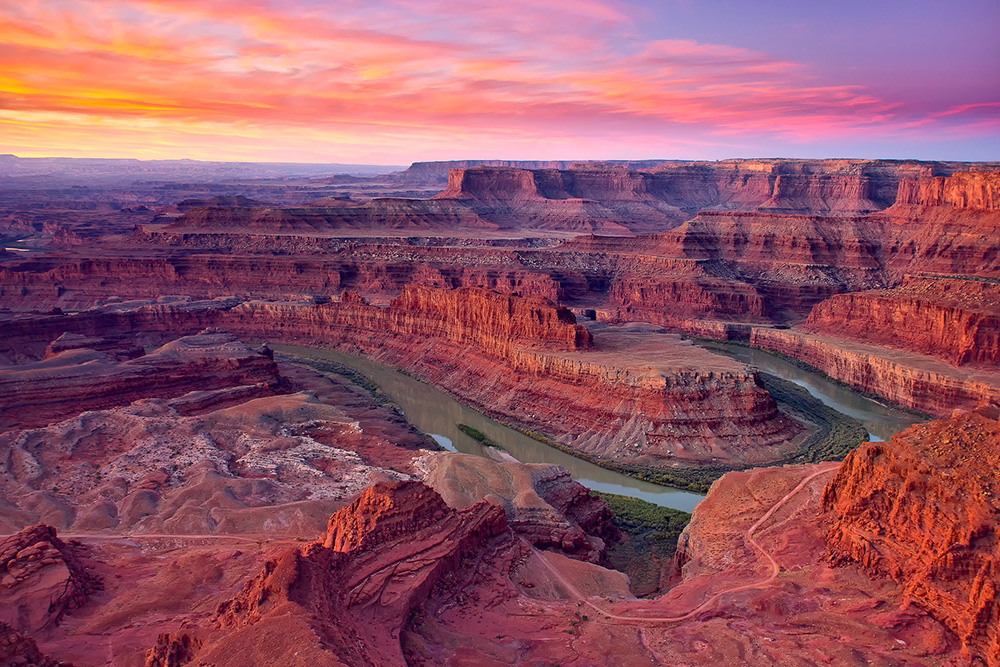
Dead Horse Point, decades later featured in the “Thelma and Louise” movie, also had not yet been designated a park. Perched on the cliff edge alone under the stars in their VW, a mouse scampered over them all night. Linda laughingly called it a “kutsa mouse ,” mangled Yiddish she claimed for little turds. Cornering it with a sheet, they gently deposited the rodent outside, but up the wheel-well back into the cabin it scampered. The VW bus was not well sealed. The mouse settled in up front instead of among their bedclothes, and they passed the night in gentle coexistence. In the morning, it was gone, an ambassador from the wild, welcoming them they imagined to the wonders of that land.

In her first college year Linda chose the Hopi culture as the subject of her thesis. After all her studies, there she was. Still relatively undiscovered in 1970 by tourists anyway, the Hopi were one of the few native peoples who did not engage in prolonged and ultimately futile fighting the whites for their land. Although neglected and isolated, they did not wind up totally displaced and remained on their three remote mesas, with Old Oraibi the longest continuously inhabited settlement in North America.
Perched in the back shadows of a small shed/store, an elder consented to talk with Linda for hours. He invited them to Third Mesa to witness one of the last Kachina Dances open to whites and non-Hopi. Awesome to the point of creepy, the Kachina’s emerged from their kivas. The Elder whispered how the Kachina channeled spirits that could visit only seasonally when the Earth and Sun were in proper configuration. Linda of course wildly extrapolated this must mean interstellar beings, who seasonally when their star system oriented on the opposite side of our sun could not communicate with us on Earth. This folded nicely into their just-as-wild interpretations of what they’d seen at Newspaper Rock.
Ah, youth!
As they departed and crossed into Navajo land, they passed another frail elder walking alone on the empty highway in the 105-degree desert sun. He remarked how “You people (whites) don’t see what is important, the people, the spirits. You wander around and point at the colors of rocks“.
Fair assessment, for the most part…
Far in the distance, a patch of green stood out against the red and orange cliffs at the foot of a mesa, the site of a Squaw Dance. They drove well out of the way to get him there, and the elder invited them to stay. Like the Kachina ceremony, however, despite the welcome and invite it felt awkward and somehow intrusive, inappropriate. Unlike other ceremonies staged for tourists they attended years later, these were solemn and most authentic. They felt blessed, recognized by something greater than the native peoples’ welcome, and that was sufficient.
They left the Squaw Dance site quickly and drove to a sun-blasted mesa top over the Painted Desert.
Just outside of Tuba City (Linda loved that name), they found a pull-off onto a bare mesa above the desert. All night, blast-force winds rocked the bus, and they could not sleep. As the faintest hint of dawn kissed the horizon, the winds intensified, as though lashed by the approaching sun. They stood, the wind it felt flaying off layers of detritus accumulated by years in civilization, blast-lashing them clean to a primal core. They stood holding each other as the sun rose to reveal the multi-hued beauty and bizarre wind-sculpted rock forms of the Painted Desert, cleansed and ushered by the elements into a life together, as grateful as they would ever be in their lives.
What other woman would have responded so, rejoicing and reveling to what many would experience as hardship and deprivation?
No one. She was one of a kind.
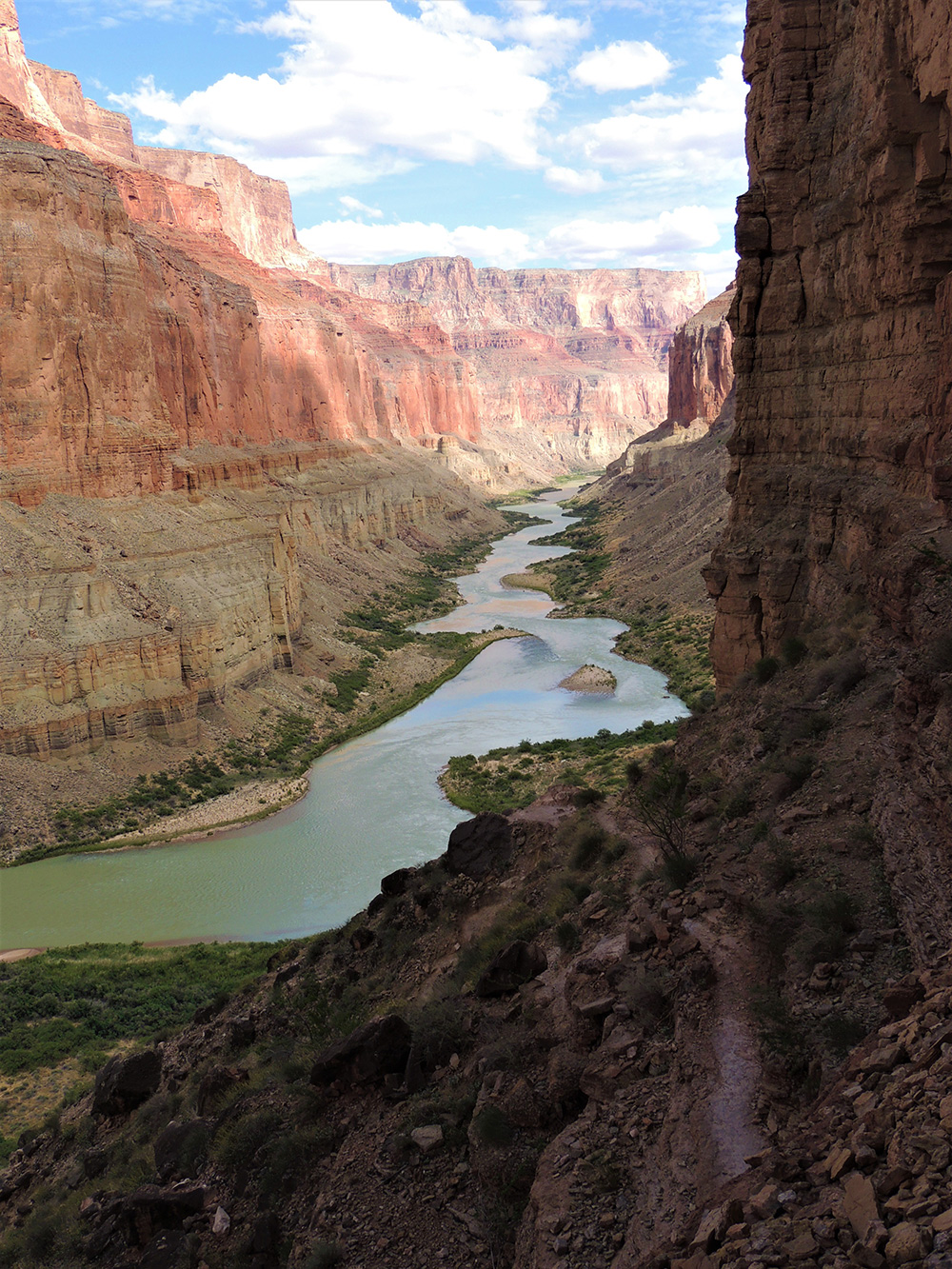
Their first Grand Canyon venture was from the North Rim. Miles of majestic climax Ponderosa pine led to the Lodge, log and stone from a century before that hid the view of what lay below. Scrambling for a backcountry permit before the office closed, they started down late afternoon feeling like they descended into Shangri-La, Middle Earth. Giggling and chortling like children, their faces ached with grins that felt to split their cheeks, eyes so wide like they would pop from their sockets.
Down to Roaring Springs for the night, then down to Cottonwood Camp where the pumping station for the Lodges 25 miles away on the South Rim required a crew house, and where the family and children left a table with ice cold lemonade for parched hot-footers.
Was it their love that made it a miraculous place, or that miraculous place that cascaded their love into full glory? Both. They would come back, next to the South Rim, climbing down Cedar Mesa to a small tongue and groove cabin between that trail and the Bright Angel Trail. They pirate-camped in that cabin. It is gone now, like so much in life, but never did they forget.
Driving through Utah, thinking they missed an exit, Paul whipped the bus across the median strip, damn, right where a Utah Highway Patrol car sat idling. Paul had a long beard and a cowboy hat, and knowing too well he had no license, quickly pulled to the shoulder in front of the Statie in a cloud of grit before the guy could start his lights and chase them down. As the trooper strode from his cruiser and approached from behind, Linda switched seats, put the cowboy hat on her head, and they both peered at the map. When the cop came up, his face went blank, so confounded he was at what he thought he’d seen and who was driving. “We we we don’t do that here in Utah,” and muttering, he strode off and drove away.
Linda would recall that and other episodes later with the Grateful Dead song, Sugar Magnolia: “… takes the wheel when I’m seeing double, pays my ticket when I speed.”
One of her many mini-rescues of her wild neck lover…
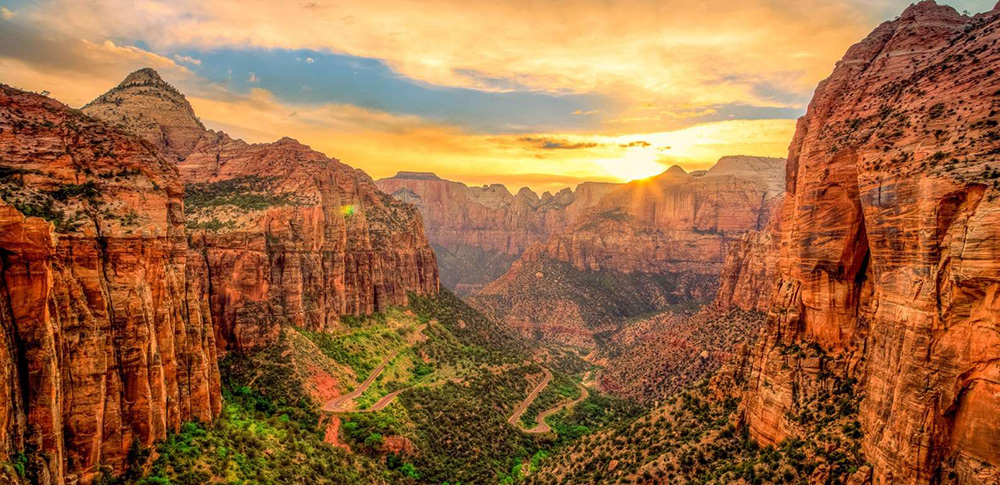
Zion: they came in from the East side through the mile-long tunnel carved in the side of sheer cliffs that bring visitors to the main valley floor and the Virgin River. Before entering the tunnel there was a diminutive parking area, a pull-off really. They climbed above, looking down at incredible sandstone domes, frozen sand dunes surrounded by rugged rich red vertical walls of thousands of feet.
The hike wasn’t that memorable, but they reached the top to look down at the minibus in the parking area, by itself amid the stunning landscape. Linda took a photo, long since lost, but they remembered the hike and the picture vividly, and that faded image remains now as a special memory.
They continued their cosmically blessed and ultimately humble and simplistic trip west. In Las Vegas 2 years earlier, Linda’s lover got arrested and spent 48 days in the felon cell block for having a Boy Scout knife and no money: “Vagrancy, Prowling, Carrying a Concealed Weapon, Grand-theft Auto, the Dire Act. He was so paranoid about Las Vegas on this trip and with his lost license, he could not bear to drive. Linda took the wheel. The “let’s get the F out of here” plan was to do a bypass and avoid the epicenter of hell.
Lordie! A Clark County Sheriff cruiser settled in behind them. NO!!! Linda clenched the wheel as the VW chugged along 10 mph below the speed limit. 15 minutes the cruiser followed, then passed and moved in front – right in front, the possible prelude of another cruiser pinning them from behind to dragnet force the bus to a stop.
Ahead the highway forked: to the right, exit north on US 95, out, out away from the peril and paranoia. Three lanes headed into downtown, the Strip, and the Clark County Correctional Facility. As though hypnotized by a snake, Linda followed the cruiser into the downtown.
Arrgh and hell fire! She’d never even driven the stick shift of their failing VW in urban traffic! One mistake, they’d get pulled over. One scintilla less compression in the VW pistons, and they’d sputter to a stop, most likely right on the thoroughfare, drawing instant adverse police attention. Given the tiny amount of pot they had and the minimal amount of money, with Nevada’s draconian laws they envisioned a meshwork of bars across their future, dead ahead – back into the slammer. Back in the slammer meant years as they could factor it. Jaw clenched, they waited for the end.
Linda did great. Jerking her head up, spine erect but not stiff, she backed off the cruiser, slowed down, and then shifted gears to chug through downtown, back onto US 95 north.
She was a cool customer under pressure, that woman.
Continuing north, the engine sounded worse and worse, weaker and weaker, so they decided to try to bolt west across Death Valley. This was during the Vietnam War. Tanks shelled practice-targets on the side ranges off US 95, the nuclear testing sites just east over the ridges. So weird.
The original plan had them going north to Tonopah, then west to Yosemite. But the engine ruled otherwise, and they now looked instead to bolt west pronto post-haste. They found a road on the Rand McNally atlas, old reliable Rand McNally, right? Looked reasonable. Turning into Death Valley out of a Nevada ghost town called Beatty, heat-shimmers coiled and uncoiled the blacktop. Mirages glistened like rain puddles, evaporating in mind and eye into a tarmac ribbon sinuously extending into a deep basin as far as the eye could see, the lowest spot on Earth, and the hottest.
The engine vibrated and shook like a misloaded washing machine. In desperation, they thought it might be the pulley pulled off a little too haphazardly back in Boulder with the first engine rebuild. Maybe it bent: a desperate hope, but all they had. The bus rolled to a stop. Linda, her brother’s dog Newton, and her companion started walking out of midsummer-noon Death Valley. Nobody picked them up. Only 5 miles…
Linda never whined or complained.
Five miles into Death Valley, they began the trudge back to the small crossroads ghost town to a Catholic Church that looked abandoned, and next to it, a TV repair shop that was packed with electronics. Not abandoned. As they peered through the dusty church windows hoping for some clergy person who might kindly assist, or at least not call the troopers, a man named Paul Mason emerged from the also NOT-abandoned TV repair shop, a building with walls sagging into the desert grit, a low roof with weeds growing out the top, windows and doors akilter.
Gray hair thin and frizzy above his jowled round face and silver beard, Paul Mason informed them he was caretaker for the church but still did TV repair work. They stayed a week. No customers, no active tools or repairs going on, the dishes in the sink had fossilized scrapes of nondescript food smears. The man never ate the entire time, drinking only coffee, smoking Bugler cigarettes one after another. But the wall-to-wall electronic equipment, the equipment behind the shelves of dusty cobwebbed home TV and radio appliances? The meters glowed and the circuits hummed, day and night.
Talking with the man, they covered a broad array of topics. He seemed piercingly intelligent. But things began to not fit together – him, his story, a house stuffed with electronics next to a nuclear testing site. Once in passing he mentioned President McKinley, like he’d known him personally, and he offered that his family was very long lived. After extended discussions on the environment and social egalitarian principles, he then seemed to take a contrarian position, positing that war was necessary to control population.
Of course, as hippies the couple professed that peace was the only way to have balance with the Earth and each other, the only way. They were so purely innocent in their assertions that the man smiled and appeared reassured. But Linda whispered afterward that he was in some way testing them, and they passed the test. Maybe humans passed a test. All this had them convinced he was an alien monitoring US nuclear testing.
Maybe less delusional, Russian?
Linda felt safe enough with her (Gary’s) dog Newton, and they had to get to the west coast, had to get the F out of Nevada while they still could. Hitchhiking back to Las Vegas, picked up by the Hog Farm hippie bus (grub tents and aid station at Woodstock and other events), after swapping out the pulley at a parts store he hitchhiked back. Sitting in the dust behind the bus, Linda affirmed and beamed how it would work, prayerfully gazing at the engine and skyward. The pulley wrestled onto the crankshaft, they intended to set forth again the next day, west, into the still unknown. The die cast, they’d shot their wad, in the hands of fate… all trite, but that’s what they felt afoot and around.
That last night Paul M had a visitor. Linda’s dog Newton went berserk, barking wildly and throwing himself against the VW cabin door, but looking more fearful than fierce. The visitor looked and felt instantly to them as, well, insidious, weird. Pointed dark goatee and shadowed eyes, he smoked Beedis instead of Bugler’s, betel leaf and tobacco flakes in a leaf wrap. Paul tried one and became violently ill, but like Paul M, the newcomer smoked one after another.
Paranoia, intuition, projected anxiety? No matter, they became convinced he was an alien.
Coming back years later, the house still full of electronic equipment but all cobwebs, dust drifted onto the door jambs inches deep. No sign of Paul M, no sign of anything.
With what they hoped was a repaired engine, they set off again, veering west but this time across the mountains. 10 miles across the desert, 15 up the mountain grade. Near the ranch crossroads at Lida, Nevada, it threw a rod. Nothing to do but try to drive then coast back down and hope to make US 95. From there, who knew? But it offered some chance of help besides barren desert and parched peaks.
The thrown rod slamming against the crankcase, shuddering the vehicle from side to side, smoke filled the cabin like a vintage WW II bomber going down. So loud was the din that they couldn’t hear each other.
Maybe Linda wasn’t an air force-trained crew member, but she needed no instructions, and instinctively began throwing everything into a large sea trunk and their sole backpack. Other than that, neither could think of anything but to vibe their entire guts and spirit into the battered crankcase and hope it would keep going.
It didn’t. They glided down the last foothill to a stop. Oil fumes wreathed the vehicle and smeared their faces. They paced a few hundred yards off into the desert and hugged. Looking down, an archetypal sun-bleached cow skull with empty sockets caught the twilight beams of a full moon as it rose above heat and haze. Holding Paul, Linda recalled with solemn awe how the prior full moon rose when the bus blew out in Boulder, and this one now meant the cycle was complete. It was over, but they were safe and protected.
That was classic Linda.
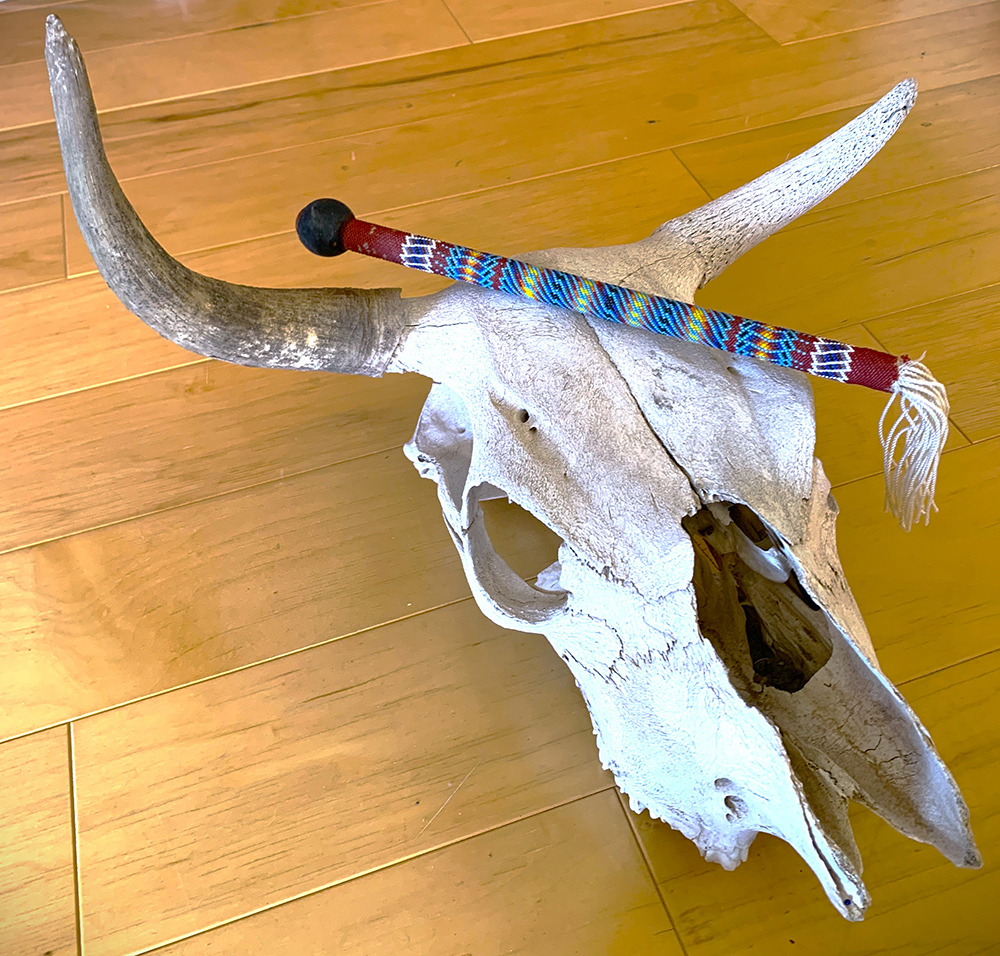
No second repair this time, that was clear. A rancher they had passed came back in his pickup and towed them the rest of the way to the highway. A big-rig tractor sans his trailer stopped, took pity on them in the baking sun. His cabin was only big enough for one, obviously Linda, but with a 6-foot chain he hooked up the bus. Paul at the wheel, the tractor and cab loomed before his bulging eyes, filling the windscreen and his mind. Burning out the brakes to keep from rear-ending the truck, their coupled-together rigs raced north to Tonopah Nevada.
They rolled into town after midnight on a Saturday night to the Mizpah hotel, whose slogan glittering on the sputtering neon rooftop sign was “Where the fallout is in dollars.” The honkytonk played, the slot machines chimed and rang, until covered with grease and grime, obvious hippies dragged a trunk across the casino floor. Dead silence. It was also the Trailways bus stop, and as a quiet hum of voices began filling the room, they placed everything in the trunk and onto the Trailways bus to be shipped home. Their VW bus remained covered in oil stains and dirt in the motel lot, never to be seen by them again.
They made it to Berkely by agreeing to sit in a house trailer, a double-wide but this only one half of one, sheathed in plastic, being towed across the Sierras to the coast. Huddled in the “living room,” the sheathing snapped in the wind, through the dark and over the mountains into the to-them legendary Berkley. There was a garbage worker strike, piles heaped in the street stinking in the heat. NOT their idealized vision of hippy-heaven, so they hitched further south, to the redwoods and Big Sur.
Two years earlier, Paul’s brother Peter took him into the remote backcountry of the Ventana Wilderness. This time Linda followed up the 12-mile trail to Sykes Camp, steep canyons behind the coastal range, canyons overtopped by giant redwoods, hot springs flowing out of the hillsides into soft pine needle cushions on the bottoms of soaking pools, then flowing down algae covered boulders into the ice-cold mountain streams. They slept the night in the heart of a giant redwood, a swift coursing stream singing all night with the wind. In a wood cave carved out by an ancient fire in its base, the tree still thriving, they resided safe and enchanted in its shelter.
Most persons in the brutal hike and rugged “deprivation” of such a venture would have at least complained or chastised, or would have broken, to bail or to wail. Instead of a “why in hell are you doing this to me”, Linda radiated happiness and engagement, was almost a nature nymph of the forest and not just her lover’s companion. She glowed and thrived, loving it, and loving him.
Linda, the best wilderness (and life) partner a person could wish for.
After all that, they bonded for life.